
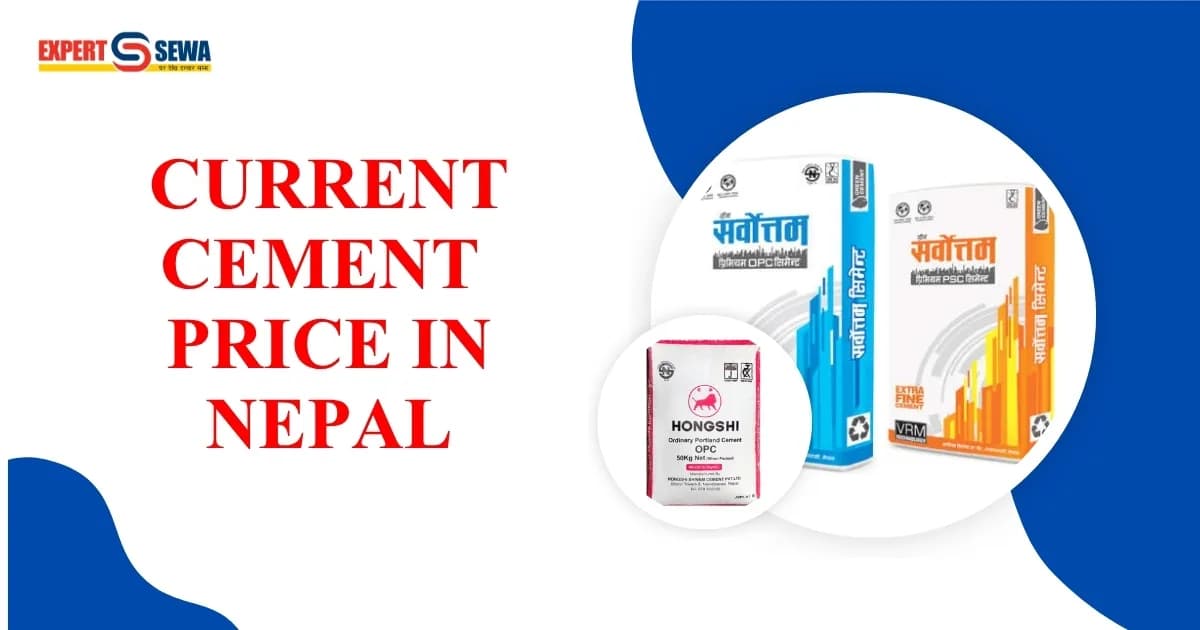
Current Cement Price in Nepal: 2026 Price List, Trends & Buying Guide for Home Builders
Last Updated: May 2026 | Coverage: Kathmandu Valley & Major Cities of Nepal Prices listed are indicative market rates and may vary by location, supplier, and season. Always verify with your local dealer before purchasing.
Why Knowing Cement Prices in Nepal Matters Before You Build
Building a house in Nepal is one of the biggest investments of your life. Whether you're constructing a new home in Kathmandu or renovating a property in Pokhara, cement is your most critical and cost-heavy material.
A single mistake — buying the wrong grade, purchasing at peak season, or trusting an unverified supplier — can cost you tens of thousands of rupees and compromise your building's structural integrity and earthquake-resistant design.
This guide gives you everything: updated 2026 price lists, OPC vs PPC comparison, brand recommendations, and expert buying tips — so you can make smart, confident decisions.
Cement Price in Nepal 2026: Updated Price List by Brand Category
Cement in Nepal is broadly categorized into three tiers based on brand reputation, production capacity, and quality consistency. Here's a clean comparison:
Premium Cement Brands — Best for RCC, Columns & Slabs
Brand Name | Type | Est. Price (NPR/50kg bag) | Best Use Case |
Hongshi / Huaxin Cement | OPC | NPR 900 – 1,050 | High-rise buildings, commercial RCC work |
CG Cement | OPC | NPR 900 – 920 | Nationwide projects, columns & foundations |
Jagdamba Cement | OPC | NPR 880 – 950 | Consistent strength, residential & commercial |
Shivam Cement | OPC | NPR 850 – 900 | Heavy structural use, greenfield construction |
Best for: Foundations, columns, slabs, earthquake-resistant structures, and commercial buildings.
Mid-Range Cement Brands — Best Value for Residential Homes
Brand Name | Type | Est. Price (NPR/50kg bag) | Best Use Case |
Arghakhanchi Cement | OPC / PPC | NPR 750 – 900 | Residential houses, mixed RCC |
Sarbottam Cement | OPC / PPC | NPR 720 – 850 | Load-bearing walls, roofing |
United Cement | OPC / PPC | NPR 700 – 790 | Budget-conscious residential builds |
Ghorahi Cement | OPC / PPC | NPR 650 – 900 | Mid-West Nepal, general construction |
Best for: Residential home construction, plastering, brickwork, and mixed-use structural applications.
Budget Cement Brands — Best for Non-Structural & Finishing Work
Brand Name | Type | Est. Price (NPR/50kg bag) | Best Use Case |
Hetauda Cement | OPC / PPC | NPR 700 – 850 | Plastering, block masonry |
Maruti Cement | OPC / PPC | NPR 650 – 850 | Non-structural, finishing work |
Agni Cement | OPC / PPC | NPR 600 – 830 | Lightweight construction |
Ghorahi PPC | PPC | NPR 580 (factory) | Mid-West region, finishing only |
Note: Budget cement is suitable for non-structural purposes. Do NOT use budget brands for foundations, columns, or slabs where structural load is critical.
Regional Pricing Note: Cement prices in Kathmandu Valley average around NPR 800–850/bag. In cities like Pokhara, Chitwan, or Biratnagar, expect NPR 820–880/bag. In remote Terai and hilly regions, transport surcharges can push prices to NPR 900–1,000+/bag.
Factors Affecting Cement Prices in Nepal Today
Understanding why prices fluctuate helps you buy smarter and plan your house construction cost more accurately.
1. Energy Costs
Cement production is extremely energy-intensive. When electricity tariffs rise or factories switch to diesel generators during load-shedding, production costs increase — and those costs are passed on to you.
Nepal's cement industry is heavily dependent on electricity from NEA. Any disruption directly impacts the Kathmandu cement rates and beyond.
2. Transport & Fuel Prices
Nepal is landlocked. Raw materials like clinker (used in OPC production) are often imported from India. Rising diesel prices or border delays immediately spike cement prices, especially in the hills and remote Terai districts.
Transport costs alone can add NPR 50–150 per bag depending on distance from the production facility.
3. Seasonality & Construction Demand
Nepal has a distinct construction calendar:
Peak Season (October – March): Dry weather drives high construction activity. Demand surges, and so do prices.
Monsoon Season (June – September): Construction slows due to rain. Dealers sometimes offer discounts of NPR 30–70/bag to clear inventory.
Pro Tip: If you can store cement safely, buy in bulk during monsoon to lock in lower prices.
OPC vs. PPC: Which Cement Should You Choose for Your House in Nepal?
This is the most common question among homeowners and contractors. Here's the straight answer:
OPC (Ordinary Portland Cement)
Sets faster — ideal where early strength is critical
Higher early compressive strength
Best for: Foundations, columns, beams, slabs, RCC structures, earthquake-resistant design
Price range: NPR 650 – 1,050/bag (2026)
PPC (Portland Pozzolana Cement)
Sets slower but achieves higher long-term strength
More durable in moist/humid environments — excellent for Nepal's monsoon climate
Lower heat of hydration — reduces cracking in large concrete pours
Best for: Plastering, brickwork, mass concrete, waterproofing layers, finishing coats
Price range: NPR 580 – 950/bag (2026) — generally cheaper than OPC
The Expert Verdict for Nepal's Context
Use OPC for structural elements (foundations, columns, slabs). Use PPC for non-structural and finishing work (plastering, masonry, flooring). Many experienced Nepali engineers recommend a dual-cement strategy to balance cost and performance — especially critical given Nepal's seismic zone classification.
Nepal lies in Seismic Zone IV/V. Correct cement selection is non-negotiable for earthquake-resistant design. Always consult a licensed civil engineer before specifying cement grades.
Expert Tips for Buying Construction Materials in Nepal
Whether you're a homeowner or a contractor, these tips will protect your budget and your building.
Always Check the Manufacturing Date: Cement loses roughly 20% of its strength after 3 months of storage. Bags older than 90 days should be refused. Check the date stamp printed on every bag.
Buy from Authorized Dealers Only: Counterfeit or adulterated cement is a real problem in Nepal's market. Purchase from certified distributors or brand-authorized shops to ensure you receive genuine product.
Buy in Bulk to Save Money: Most dealers offer NPR 20–50 off per bag on orders of 100+ bags. If your project needs 500+ bags, negotiate directly with the factory or regional distributor for even better rates.
Inspect the Bag Condition: Reject bags that are damp, partially hardened, or have lumps. Even a few lumpy bags signal poor storage — and poor storage means compromised strength.
Verify NS (Nepal Standard) Certification: All cement sold in Nepal must carry the NS certification mark from the Nepal Bureau of Standards and Metrology (NBSM). If a bag lacks this mark, walk away immediately.
Compare Prices Across Multiple Suppliers: Hardware stores, wholesale suppliers, and factory direct prices all differ. Get at least 3 quotes before committing to a supplier, especially for large-volume orders in Kathmandu or Pokhara.
Conclusion: Build Smart, Build Safe
Cement isn't just another line item in your construction budget — it is the foundation of your family's safety. Choosing the right brand, the right type (OPC vs PPC), and buying at the right time can save you thousands of rupees and decades of structural problems.
📞 Your Next Step
Don't make cement purchasing decisions based on price alone. Consult with a licensed civil or structural engineer who understands Nepal's local soil conditions, seismic risk, and construction regulations. Verify all prices directly with your local dealer or hardware supplier before placing bulk orders — market rates can shift within days.
If you're building or renovating in Kathmandu, Pokhara, or anywhere across Nepal, getting professional guidance isn't a luxury — it's a necessity.
Frequently Asked Questions (FAQ)
Q1: What is the average cement price in Nepal in 2026? OPC cement ranges from NPR 650 to NPR 1,050 per 50kg bag, while PPC cement ranges from NPR 580 to NPR 950 per bag, depending on the brand, location, and season.
Q2: Is PPC cheaper than OPC in Nepal? Yes. PPC is generally NPR 50–150 cheaper per bag than OPC of the same brand. However, PPC is not recommended as a direct replacement for OPC in structural work like columns and foundations.
Q3: Which is the best cement brand in Nepal for house construction? For structural work, brands like Jagdamba, Sarbottam, Hongshi, and Shivam are widely trusted by engineers. For plastering and finishing, mid-range brands like Arghakhanchi and United Cement offer excellent value.
Q4: Are cement prices higher in rural Nepal than in Kathmandu? Yes. Due to transport costs, cement prices in remote districts can be NPR 100–200 higher per bag than Kathmandu Valley rates.
Q5: How do I check if cement is genuine in Nepal? Look for the NS (Nepal Standard) certification mark on the bag, check the manufacturing date, and purchase only from authorized dealers. Avoid bags that feel damp or contain lumps.
Q6: When is the best time to buy cement in Nepal to save money? Monsoon season (June–September) is typically the best time. Construction activity slows down, demand drops, and dealers often offer discounts to reduce inventory.
Q7: Can I use the same cement for both structural and finishing work? Technically yes, but it's not economical. OPC for structural work + PPC for finishing is the most cost-effective and performance-optimized strategy recommended by Nepali civil engineers.
Disclaimer: All prices listed in this article are indicative market estimates compiled from publicly available sources as of May 2026. Actual prices vary by brand, region, dealer, purchase quantity, and current market conditions. Always confirm current rates directly with your local supplier or authorized dealer before making purchasing decisions. This article is for informational purposes only and does not constitute professional engineering or financial advice.