
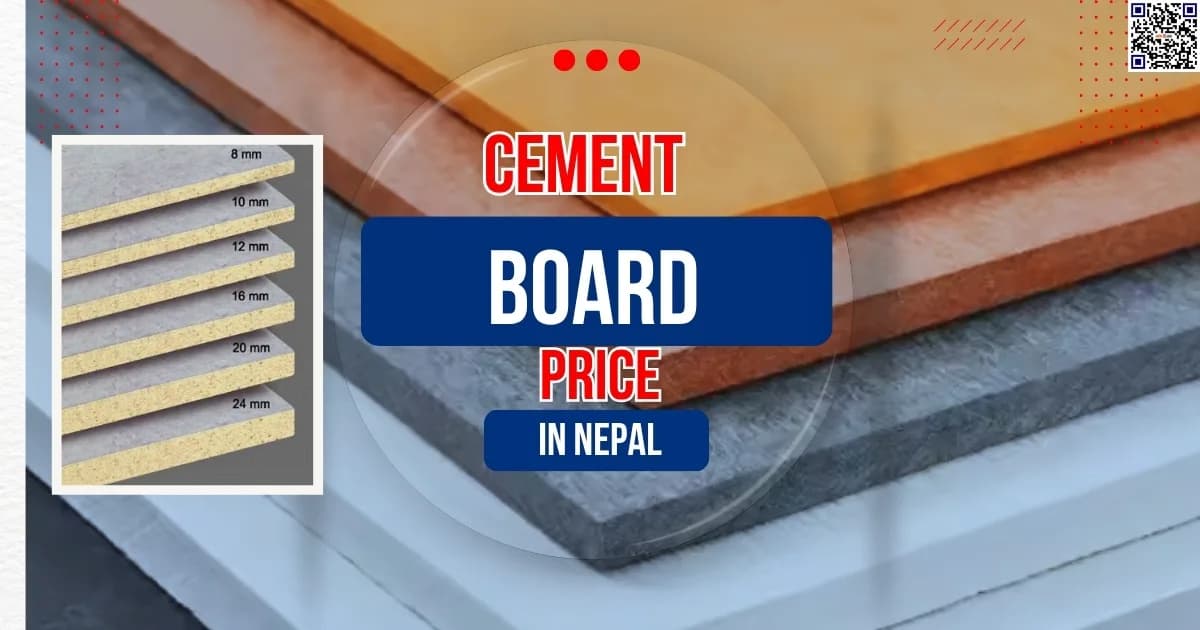
Cement Board Price Nepal 2026: Hidden Truths
If you have ever walked through a modern construction site in Kathmandu, Pokhara, or Biratnagar, you have likely seen cement boards being used almost everywhere from walls and ceilings to partitions and exterior cladding. Over the past few years, cement board in Nepal has quietly become one of the most trusted construction materials across Nepal.
So what exactly is making cement board in Nepal so popular among builders, architects, and homeowners in Nepal? The answer lies in its impressive combination of strength, durability, fire resistance, and moisture-proof performance. Whether you are building a cozy home in the Terai's humid climate or constructing a commercial complex in the cold mountain regions, cement board in Nepal holds its form and quality without warping, swelling, or deteriorating something traditional plywood and gypsum boards simply cannot match.
Today, cement boards in Nepal are extensively used in false ceilings, dry walls, exterior facades, prefabricated buildings, schools, hospitals, and modern commercial spaces. The growing trend of urban construction and prefab housing has pushed the demand for cement board to new heights.
Naturally, one of the first things any buyer, contractor, or architect wants to know is what is the cement board price in Nepal right now?
This comprehensive 2026 guide covers everything you need updated cement board price in Nepal, key market trends, supply challenges, and expert buying tips so you can make the smartest decision for your construction project.
Cement Board Prices in Nepal (Updated )
The cement board price in Nepal varies depending on the thickness, type, and brand. Below is the most comprehensive and up-to-date cement board price list compiled from Kathmandu, Pokhara, Biratnagar, Butwal, and other major Nepali cities as of 2026:
Cement board prices in Nepal on the basis of type and thickness:
Type & Thickness | Approx. Price in | Best Use Cases |
4mm Plain Cement Board | NPR 30 – 32 per sq.ft | False ceilings, light partitions |
6mm Cement Board | NPR 36 – 40 per sq.ft | Ceiling panels, dry walls |
8mm Cement Board | NPR 45 – 50 per sq.ft | Internal walls, office partitions |
10mm Cement Board | NPR 15,000 – 16,000 per unit | Flooring base, exterior walls |
12mm Cement Board | NPR 4,800 – 5,200 per sheet | Heavy-duty partitions, wet areas |
16mm Cement Board | NPR 6,500 – 7,000 per sheet | Strong flooring, high-rise projects |
Designer / Texture Cement Board | NPR 70 – 120 per | Decorative walls, interiors, exteriors |
Fiber Cement Board (Premium) | NPR 80 – 150 per sq.ft | Facades, luxury finishes |
These cement board prices in Nepal are based on market averages in major Nepali cities (2026). Actual rates may vary due to transport costs, import duties, seasonal demand fluctuations, and regional
Factors That Affect Cement Board Price in Nepal
The cement board price in Nepal is never a fixed number. It moves up and down based on a combination of technical, logistical, and market forces. If you want to buy cement boards in Nepal at the best possible price, understanding these factors will give you a real edge. Here is a detailed breakdown:
Thickness and Density of the Cement Board
Thickness is the single biggest factor in determining how much a cement board costs. Thicker boards like 10mm, 12mm, and 16mm cement boards require significantly more raw materials including cement, silica, and cellulose fiber. This makes them stronger and more durable, ideal for exterior walls, flooring, and high-load partitions. But naturally, they cost more. On the other hand, thinner cement boards 4mm, 6mm, and 8mm are lighter, cheaper to produce, and perfect for ceilings and lightweight partitions where structural strength is not a priority. Simple rule: the thicker the cement board in Nepal, the higher the price.
Type of Cement Board
Cement boards come in several categories, each with a unique price point. Plain Cement Boards in Nepal are the most affordable basic, economical, and suited for everyday applications. Fiber Cement Boards in Nepal are manufactured by mixing cellulose fibers into the cement composition, resulting in a board that is stronger, lighter, and far more resistant to moisture, fire, and termites. This makes them a premium product with a premium price. Designer Cement Boards in Nepal take things a step further with surface textures that mimic wood grain, stone, or other patterns. Advanced manufacturing pushes their cost considerably higher, but they deliver stunning aesthetics for modern interiors and exteriors.
Brand and Quality
Not all cement boards in Nepal are made equal and neither are their prices. Imported cement boards from India, Thailand, or China carry additional transportation and customs costs, which pushes their retail price higher. However, they are preferred in premium and large-scale construction projects because of their consistent quality, uniform thickness, and reliable performance. Local Nepali cement board brands, on the other hand, are more affordable and serve as excellent alternatives for budget-conscious buyers. However, quality can sometimes be inconsistent. Always check for certifications and reviews before choosing a cement board brand.
Regional Availability and Transportation Costs
Geography plays a massive role in shaping the final cement board price in Nepal you pay. In urban centers like Kathmandu, Pokhara, Butwal, and Biratnagar, the cement board price tends to be relatively stable because distribution networks are well established and demand is consistently high. But in rural, hilly, or remote areas, transporting heavy cement boards across difficult terrain dramatically increases the cost. Fuel prices, road conditions, and the number of middlemen involved all add to the final price tag. Bottom line: the farther you are from a major city, the more you will pay for cement board in Nepal delivery.
Market Trends, Demand, and Government Policies
Like any construction material, cement board prices in Nepal respond to macroeconomic forces. During Nepal's peak construction seasons typically March to June and September to November demand surges, pushing prices upward. Global fluctuations in cement, silica, and cellulose raw material prices also directly impact cement board production costs. Import duties and government tax policies on building materials can create sudden price hikes almost overnight. And when more brands and suppliers enter the Nepali market, competition tends to bring prices down over time. Understanding these trends helps you time your cement board purchase wisely.
Buyer Alert: Seasonal demand spikes, exchange rate shifts, and sudden changes in import duties are among the top reasons why cement board prices in Nepal can rise unexpectedly. Buying in bulk before peak construction season often saves significant money.
Market Insights Supply Shortfall &
Industry Challenges
One of the most pressing issues facing Nepal's cement board industry today is a consistent supply shortfall. Understanding why this happens helps buyers and contractors plan their procurement better and avoid costly project delays.
Why Choose Cement Boards for Construction in Nepal?
If you are still weighing your options between traditional plywood, gypsum boards, and cement boards, here is a clear, honest breakdown of why cement board wins in almost every major category for Nepal's construction environment:
Moisture Resistant: Cement boards do not absorb water, making them ideal for kitchens, bathrooms, basements, and any area exposed to humidity or moisture.
Fire Resistant: Unlike wood or gypsum, cement board does not catch fire easily, adding a critical layer of safety to homes and commercial buildings.
Durable & Long-Lasting: A quality cement board can withstand pressure, harsh weather, and even termite attack lasting decades without replacement.
Eco-Friendly Choice: By replacing timber-based products with cement board, builders contribute to reducing deforestation and supporting sustainable construction in Nepal.
Cost-Effective Over Time: The upfront cement board price may seem higher than some alternatives, but the longer lifespan and minimal maintenance needs make it far more economical in the long run.
Versatile Applications: From residential homes and offices to schools, hospitals, malls, and prefabricated structures, cement boards adapt to virtually any construction requirement.
Smart Buying Tips for Cement Boards in Nepal
Getting the best cement board price in Nepal is not just about finding the cheapest option it is about making the right choice for your specific project. Here are the most practical buying tips from industry experts:
Choose the Right Cement Board Thickness First: Buying the wrong thickness wastes money and compromises structural performance. Match your cement board thickness to the application: 4–6mm for ceilings, 8–10mm for walls, and 12–16mm for flooring and heavy-duty zones.
Compare Multiple Cement Board Brands: Never settle for the first quote you receive. Compare prices of Indian, Chinese, Thai, and local Nepali cement board brands to find the best value for your budget and quality requirements.
Check for Quality Certifications: Always look for ISO or ISI certification marks on your cement board. Certified boards guarantee consistent thickness, strength, and performance protecting your investment.
Avoid Counterfeit or Substandard Cement Boards: The Nepali market unfortunately has counterfeit and low-quality cement boards that look similar but fail quickly. Always purchase from verified and trusted suppliers with a strong market reputation.
Factor in Delivery & Transport Costs: Especially in rural or hilly areas of Nepal, arranging delivery directly with your cement board supplier rather than through multiple middlemen can lead to significant cost savings.
Negotiate Bulk Discounts: Contractors and builders handling large-scale projects should always negotiate bulk pricing. Most cement board suppliers in Nepal offer attractive discounts for highvolume purchases. Never pay the listed retail rate without asking for a better deal.
Buy Before Peak Season: Procurement of cement boards before the peak construction season (March and September) helps you lock in better prices before demand-driven price hikes hit the market.
Conclusion Cement Boards: A Smart Investment for Nepal's Construction Future
Cement boards have genuinely transformed construction practices in Nepal. Their outstanding blend of strength, fire safety, moisture resistance, and long-term durability makes them the material of choice for both residential and commercial projects from simple home ceilings in the Terai to high-rise commercial structures in Kathmandu.
The cement board price in Nepal in 2026 ranges from as low as NPR 30 per sq.ft for entry-level 4mm boards, all the way up to NPR 7,000 per sheet for heavy-duty 16mm boards with designer and fiber cement boards commanding even higher prices for premium applications. Supply shortfalls may occasionally push prices up, but a well-planned procurement strategy ensures you get the best value for your money. Whether you are a homeowner, contractor, architect, or real estate developer, investing in quality cement boards today means fewer repairs, replacements, and headaches tomorrow.
FAQ (Frequently Asked Question) related to Cement Board Price in Nepal
Q: What is the price of a 4mm plain cement board in Nepal?
A: The price of a 4mm plain cement board in Nepal is approximately NPR 30 – 32 per sq. ft.
Q: What is the price of a 6mm cement board in Nepal?
A: The price of a 6mm cement board in Nepal is approximately NPR 36 – 40 per sq. ft.
Q: What is the price of an 8mm cement board in Nepal?
A: The price of an 8mm cement board in Nepal is approximately NPR 45 – 50 per sq. ft.
Q: What is the price of a 10mm cement board in Nepal?
A: The price of a 10mm cement board in Nepal is approximately NPR 15,000 – 16,000 per unit.
Q: What is the price of a 12mm cement board in Nepal?
A: The price of a 12mm cement board in Nepal is approximately NPR 4,800 – 5,200 per sheet.
Q: What is the price of a 16mm cement board in Nepal?
A: The price of a 16mm cement board in Nepal is approximately NPR 6,500 – 7,000 per sheet.
Q: What is the price of a Designer or Texture cement board in Nepal?
A: The price of a Designer or Texture cement board in Nepal is approximately NPR 70 – 120 per sq. ft.
Q: What is the price of a Fiber Cement Board in Nepal?
A: The price of a premium Fiber Cement Board in Nepal is approximately NPR 80 – 150 per sq. ft.